
How to Count Calories Without Weighing Food
Updated August 28, 2026 4 min read
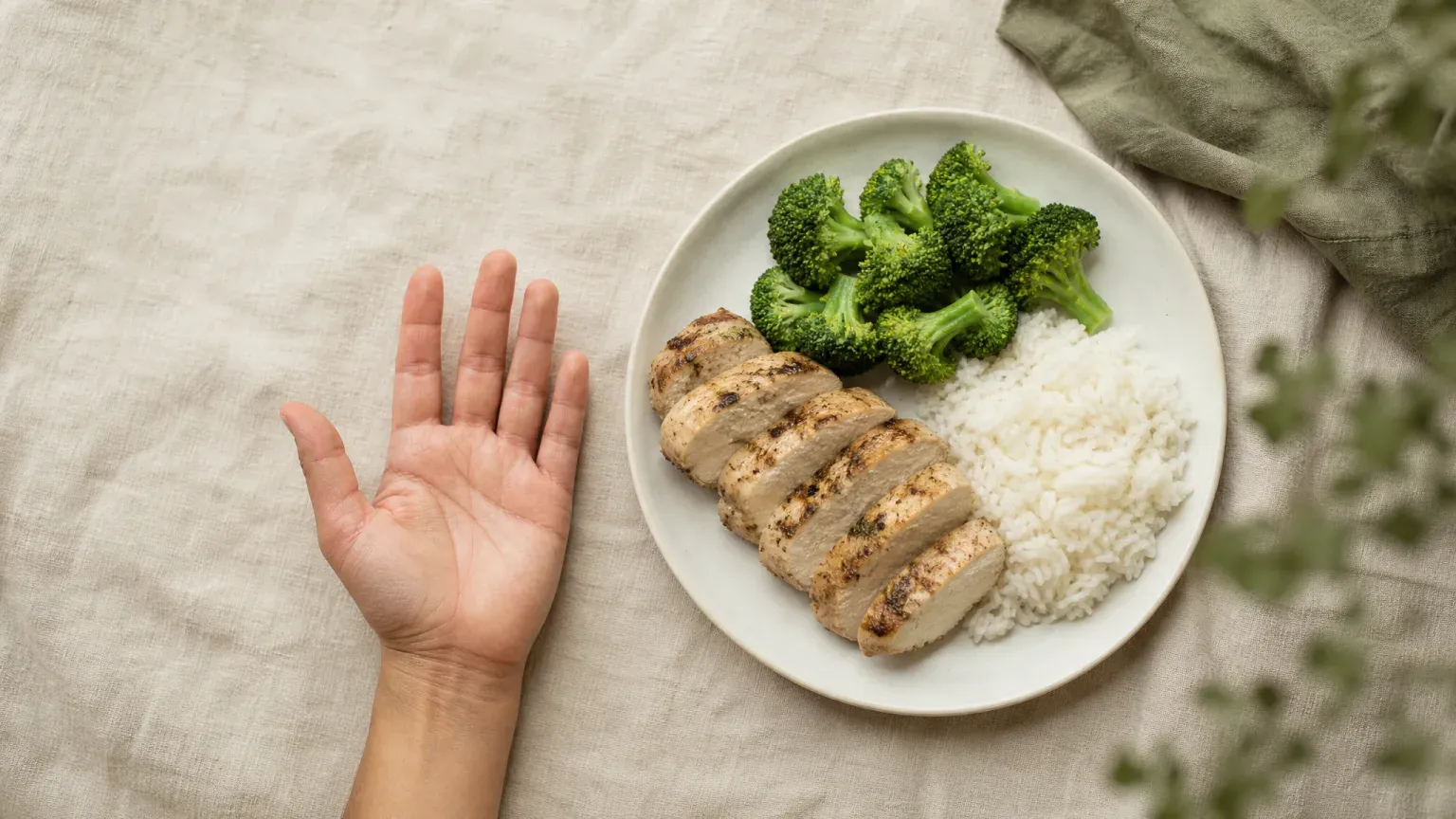
You can count calories without a food scale, and the accuracy penalty is smaller than most people expect. Three methods do the work: hand portions for anything unpackaged, the serving line on a nutrition label for anything packaged, and a photo estimate for meals you did not cook. Each lands within roughly 10 to 20 percent of a weighed value. That is close enough, because body weight responds to your average across a week, not to the precision of Tuesday’s lunch.
Why the food scale is the first thing people abandon
A kitchen scale is the most accurate tool available and the least likely to survive contact with real life. It works at your own kitchen counter. It does nothing at a restaurant, at a friend’s table, in an office cafeteria, or on a Saturday when you are already late. People quit tracking not because they stop caring but because the method demands a scale in situations that will never have one.
The fix is to lower the precision on purpose and raise how often you log. A rough number recorded every day beats an exact number recorded four days out of ten.
Method 1: measure with your hand
Your hand is a proportional measuring set that scales to your body. Larger people have larger hands and larger calorie needs, so the portions adjust automatically.
- Palm = one protein serving. Roughly 20 to 30 g of protein, or about 130 to 145 calories for a lean meat.
- Cupped hand = one carbohydrate serving. Around 110 to 120 calories of rice, pasta, oats or potato.
- Thumb = one fat serving. Roughly 90 to 100 calories of oil, butter, nut butter or cheese.
- Fist = one vegetable serving, about 25 calories.
Precision Nutrition, which built its coaching program around this system, puts hand portions within a few percentage points of weighing for typical meals. A plate with two palms of chicken, one cupped hand of rice, a thumb of olive oil and two fists of broccoli comes out near 600 calories without a single measurement.
The one thing hands consistently miss is cooking fat. Oil poured into a pan disappears visually but not nutritionally, and a tablespoon is about 120 calories. Add a thumb for anything sautéed, roasted or fried.
Method 2: read packaged food by the serving, not the package
For anything with a label you do not need to estimate at all. The number is printed. The mistake is reading the calorie figure without reading the line above it.
A bag of chips showing 150 calories often means 150 calories per serving, and the bag holds three. A bottle of juice can hold two and a half servings. Before you log a packaged food, find the serving size, decide how many servings you actually ate, and multiply. This single habit removes a large share of the calories people underreport.
Method 3: photograph the meal and let software estimate
The gap the first two methods leave is composite food. A curry, a burrito, a restaurant salad, a slice of someone’s birthday cake. You cannot see the ingredients, and hand portions assume you know what you are looking at.
This is what photo-based tracking handles. Caloryx recognizes the foods on the plate from a single picture, estimates each portion, and returns calories along with protein, carbs and fat. A photo of avocado toast comes back as one slice, 430 calories, 38 g carbs, 16 g protein, 22 g fat, and you can edit any number that looks wrong before saving it.
The practical advantage is speed rather than precision. Logging that takes five seconds gets done on the days when logging that takes two minutes does not.
How wrong will you be?
Assume 10 to 20 percent on estimated meals. On a 2,000 calorie day that is 200 to 400 calories of uncertainty, which sounds like a lot until you compare it against the alternative of skipping the log entirely.
Two rules keep the error from compounding in one direction:
- Round up on restaurant food and down on nothing. Kitchens use more oil, butter and sugar than home cooks do. If a dish looks borderline, take the higher estimate.
- Judge by the trend, not the day. If your weight has not moved in two weeks, your real intake is higher than your logged intake. Cut 200 calories from the estimate and watch the following two weeks.
That feedback loop matters more than the measuring method. A scale that you use inconsistently gives you precise numbers about an incomplete week, which is worse input than rough numbers about a complete one.
Where to start
Pick one method per food type and stop reconsidering it. Packaged food gets read off the label. Food you cooked gets hand portions plus a thumb for the oil. Anything you did not cook gets photographed. Run that for two weeks before you judge whether it works, and compare weekly averages rather than daily totals.
