
How to Calculate Calories in Homemade Food
Updated August 28, 2026 3 min read
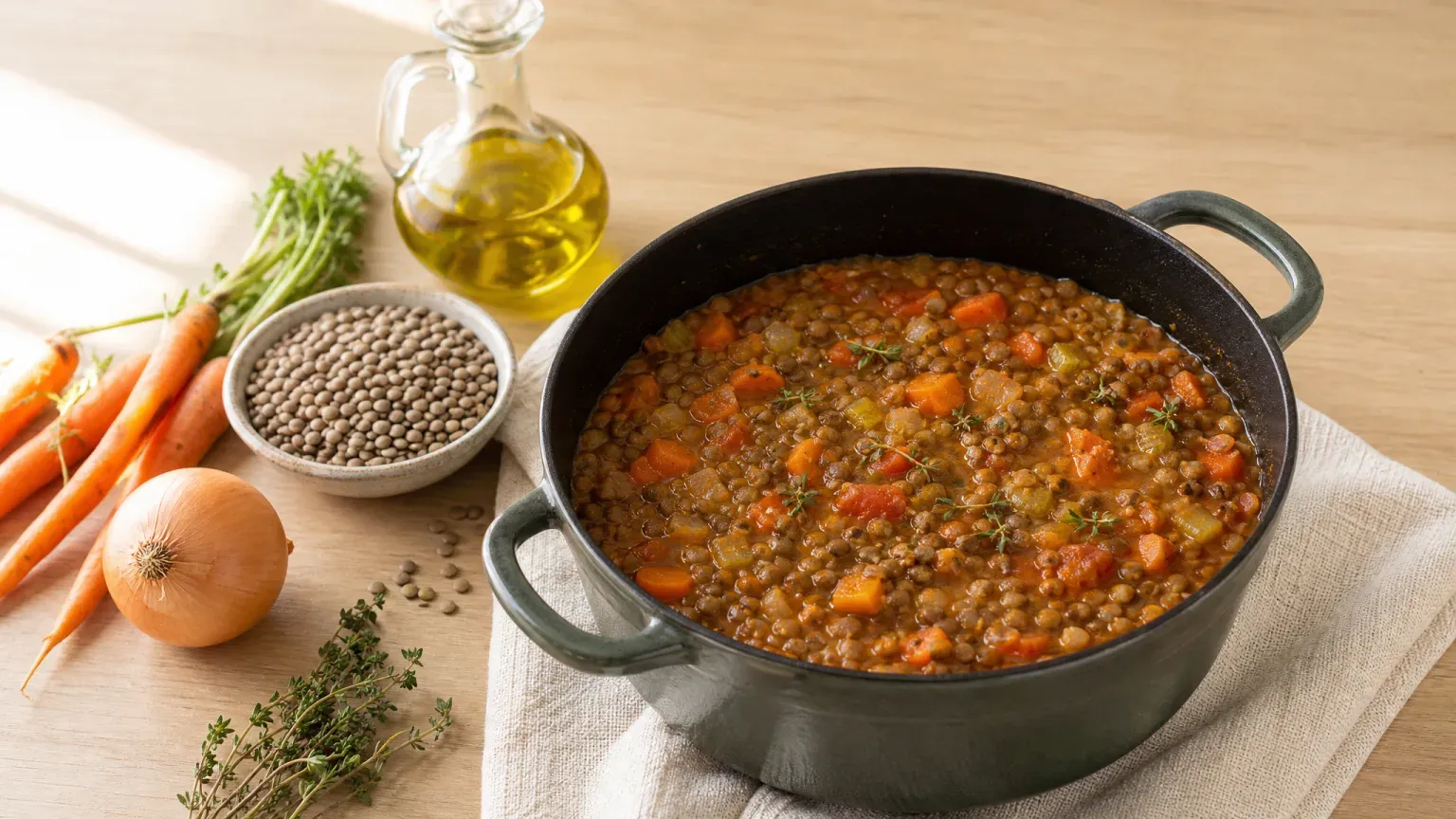
The calories in a homemade dish equal the sum of its raw ingredients, cooking fat included, divided across what you actually serve yourself. Cooking adds no calories and removes none. It only moves water around, which changes the weight without changing the energy, and that is where nearly every mistake in recipe tracking comes from.
Step 1: weigh ingredients as they go in
Keep a note open while you cook and record each ingredient in grams. Grams beat cups because volume varies with the ingredient: a cup of flour and a cup of oats weigh different amounts, and a heaped tablespoon of peanut butter can be double a level one.
Do not skip the fat. Oil, butter, ghee and the coating on the pan are the densest things in the dish at roughly 120 calories per tablespoon, and they are also the easiest to forget because they vanish into the food. A stew that reads as vegetables and lentils can carry 300 calories of olive oil.
Step 2: log everything raw
Pick raw entries and stay with them. This matters more than it sounds.
Rice roughly triples in weight as it cooks, because it absorbs water. Meat goes the other way and loses about 25 percent of its weight. If you weigh 100 g of dry rice but log the entry for cooked rice, you have understated it by around three times. If you weigh chicken after cooking but log it raw, you overstate it.
One rule avoids all of it: measure before it hits the heat, log the raw entry.
Step 3: total the dish, then divide by weight rather than servings
Adding up ingredient calories gives you the number for the whole pot. The question is what fraction of that pot ends up in front of you.
“This recipe serves four” is a guess printed by someone who has never seen your bowl. Weighing solves it:
- Weigh the empty pot before you cook.
- Weigh it full when the dish is done, and subtract to get the finished weight.
- Divide the total calories by the finished weight to get calories per gram.
- Weigh your portion and multiply.
A chili totaling 2,400 calories at 1,800 g finished weight is 1.33 calories per gram. A 400 g bowl is 533 calories. The person assuming “a quarter of the pot” would have logged 600, and the person eating 550 g while assuming a quarter would have logged 600 against a real 730.
Note that this only works if you weigh after cooking, because water evaporates. That is the point of weighing the finished dish rather than adding up the raw weights.
Step 4: save it, because you will cook it again
Most people cook the same fifteen or twenty dishes on rotation. The work above is worth doing once per recipe, not once per meal. Every tracker worth using lets you save a custom recipe or a meal, so the second time you make it you log one portion and the macros come through already calculated.
When you did not measure anything
Sometimes the cooking already happened, someone else made it, or you simply did not write anything down. Reconstructing a recipe from memory is unreliable because the fat and the portion size are exactly the parts you cannot recall.
A photo is the faster route. Caloryx identifies the components of a plated dish from one picture and returns calories with the protein, carb and fat split, which you can edit per ingredient if something looks wrong. It will not match a weighed recipe, and it is not trying to. It gets a home-cooked meal logged in a few seconds on the evenings when the alternative is logging nothing at all.
For a dish you eat every week, do the arithmetic once and save it. For everything else, photograph it and accept a 10 to 20 percent margin. Both beat an empty diary, and the empty diary is the only option that guarantees you are wrong.
Getting portions right the rest of the time
If weighing your portion is not practical, fall back on hand portions: a palm of the protein, a cupped hand of the starch, a thumb for added fat. Combined with a recipe total you calculated once, that gets you close enough to keep a weekly average honest.
